
November 17, 2026
St. Nicholas Day Shoe Gift Ideas: What to Put in Their Boots
What goes in the shoes on St. Nicholas Day, in short
On St. Nicholas Day, children usually find a few sweets, some fruit (oranges, tangerines, nuts) and one small, age-appropriate gift in their shoes, and in some homes a symbolic little switch as well. St. Nicholas comes on the night of December 5 to 6, so the boots get polished and set by the window or the front door on the evening of the 5th. The tradition is alive in Romania, Germany, Austria, Poland, Hungary, Czechia and beyond, and plenty of families who've moved abroad carry it with them. The rest is about knowing your child: what makes them squeal at 7 a.m., still in pajamas, hugging a boot. Below you'll find ideas by age, a simple balance between treats and gifts, and how to do it all on a small budget. And for a taste of what a story made for one child looks like, here's an animated winter mini-film starring a 7-year-old boy.
The tradition: polished boots and the little switch
The film above is about a boy who sets off at night after a star. For a lot of us, the St. Nicholas boot was our very first brush with that kind of magic. The evening of December 5 had its own smell: shoe polish, Dad's old rag, and Mom saying "give it another rub, St. Nicholas checks the boots too." Then the boots sat in a row on the windowsill, and in the morning they were full. The switch comes from the same place. Some parents tuck a twig in beside the sweets as a gentle hint that St. Nicholas sees everything, not as a punishment. These days it's often a little branch tied with a red ribbon, and most kids laugh at it. If you include one, put it next to something sweet, so it stays a family joke rather than a worry.
Little ones, ages 1–3: small, soft and safe
At this age, the boot itself is the gift. Your toddler hugs it, shakes it, pulls things out one by one and puts them back in. They don't need much. A board book about winter animals, a small plush toy, a pair of grippy socks, a banana or a few toddler biscuits is plenty. Save whole nuts, hard candy and toys with small parts for later years, since they can be a choking risk at this age. Keep your phone handy, because the first St. Nicholas morning your child actually understands, usually around two, is one you'll want to watch again.
Ages 4–7: the years St. Nicholas is most real
Now come the questions: how does he get in if the window's shut, how does he know my shoe size, does he get cold? This is when the magic is strongest, so it's worth feeding it with details. Alongside a tangerine and a chocolate St. Nicholas, try a book of winter stories, modeling clay, a little flashlight for under-the-blanket "missions," stickers, or new mittens in a pattern they love. What matters most, though, is a note from St. Nicholas in wobbly handwriting that mentions something true: that they learned to tie their shoelaces, or shared their toys with a cousin at Grandma's. When St. Nicholas knows something only you know, there's no doubt left.
An idea for this year's boot: a message that says their name
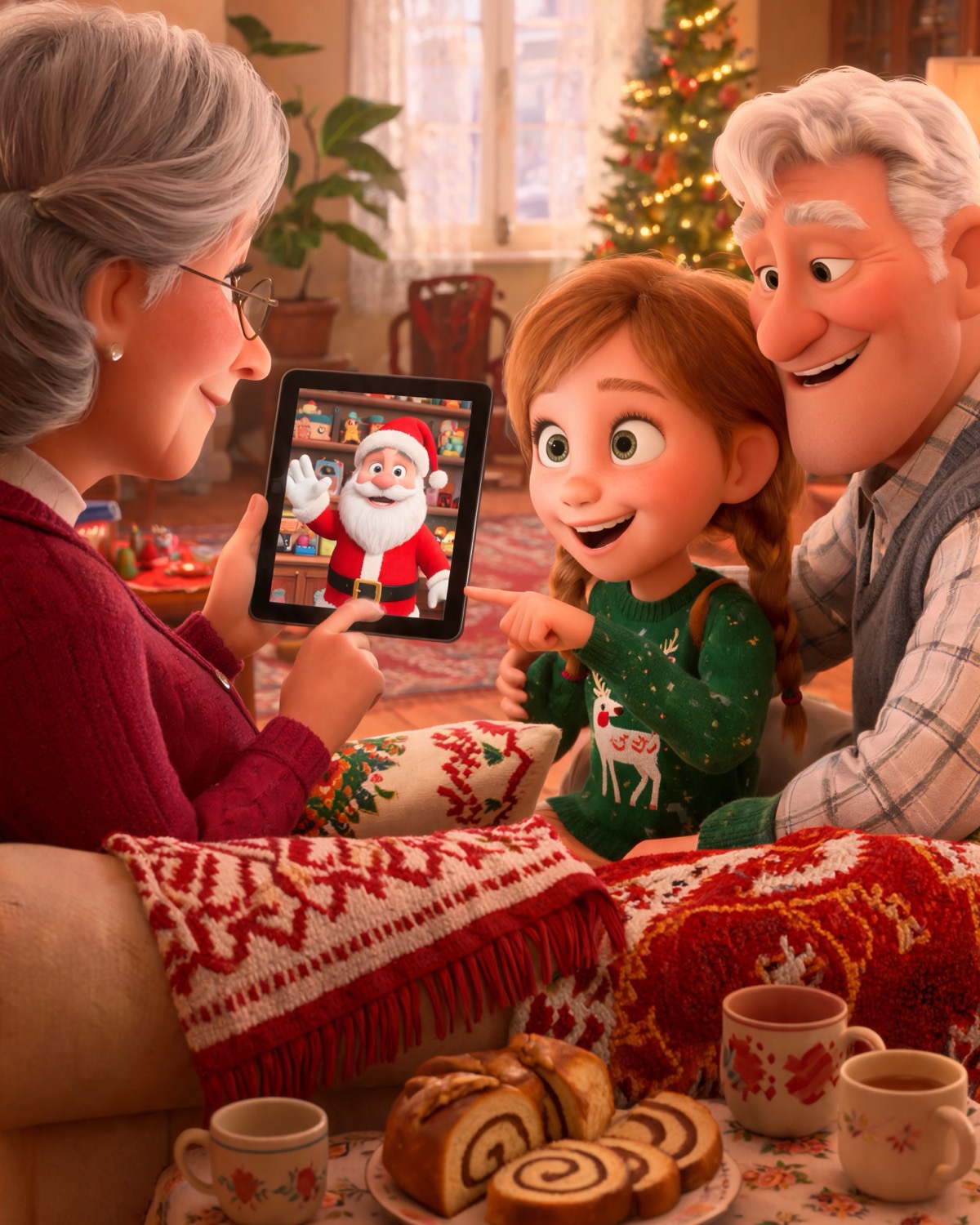
If you'd like to take the note one step further, slip a card into the boot: "St. Nicholas left a message for you on the tablet." Your child presses play and sees an animated, Pixar-style Santa looking right at them and saying their name. He knows they polished their boots all by themselves, he knows what's in their letter, and he says the good news has already reached the North Pole. Many families tell their kids that St. Nicholas is the one who checks in early and reports back to Santa, so the message fits December 6 naturally. It doesn't replace the boot. It sits beside it, as the surprise they remember. You'll find the details on our page about personalized video messages from Santa.
Ages 8–12: when they start to wonder
Around eight or nine, many kids start to suspect. Some say nothing so they don't spoil it, especially if there's a younger sibling. For them, the boot can grow up a little: the next book in their favorite series, a card game the whole family can play at the table, a proper drawing set, a bracelet-making kit or ridiculous socks they'll wear proudly to school. A "free pass" works surprisingly well at this age: a movie night where they pick, an extra hour at the ice rink, a homework-free day at Grandma's. And if they already know the truth, make them St. Nicholas's helper. Let them fill their little brother's boot. Plenty of kids feel more grown-up that way than with any gift.
Treats or small gifts? A balance that works
In our grandparents' day, the boot meant an orange, a few walnuts, maybe a bar of chocolate. Today the risk runs the other way: the boot fills up like a Christmas sack, and by December 25 the kids are already tired of surprises. One simple rule holds up year after year: something sweet, something good to eat (tangerines, nuts for older kids, a gingerbread cookie), something to do (a book, a small game) and something personal, like the note from St. Nicholas. Four little things, not a mountain. The big present stays under the tree, and the boot stays what it always was: a sign that someone thought of you in the night while you slept.
Lovely boots on a small budget, wherever you live
A great boot doesn't need a big budget. Oranges, nuts, gingerbread you bake together a few days before, a secondhand book and a handwritten letter add up to something lovely for very little. If there are several kids, give each one a matching item plus one thing that's only theirs, so there's no comparing over breakfast. And if you're raising your kids far from where you grew up, in London, Madrid or Milan, the tradition travels with you: boots on a windowsill look the same everywhere. In Italy, your little one may also hear from La Befana in January, but December 6 can stay your family's evening, with shoe polish and the grandparents on video call so they can see the morning too.
Frequently asked questions
What do you put in shoes for St. Nicholas Day?+
Children traditionally find sweets, fruit such as oranges, tangerines and nuts, and one small gift like a book, a little game or mittens. Some families add a symbolic switch, and a handwritten note from St. Nicholas makes it feel personal.
When is St. Nicholas Day?+
St. Nicholas Day is December 6, and St. Nicholas visits during the night of December 5 to 6. Children polish their boots and put them out on the evening of the 5th, then find them filled in the morning.
Which countries celebrate St. Nicholas Day with shoes?+
Putting out shoes or boots for St. Nicholas is a tradition in Romania, Germany, Austria, Poland, Hungary, Czechia and other parts of Europe, while in the Netherlands and Belgium children set out shoes for Sinterklaas. Many families living abroad keep the custom wherever they are.
What does the switch from St. Nicholas mean?+
The switch is a symbolic reminder that St. Nicholas notices mischief as well as good deeds. Today it's usually a decorated twig placed next to the sweets as a joke, not a punishment.
What can I put in a St. Nicholas shoe for a toddler?+
A board book, a soft toy, grippy socks or toddler biscuits all work well for ages 1 to 3. Avoid whole nuts, hard candy and toys with small parts at this age, since they can be a choking hazard.
What can I put in a St. Nicholas boot besides candy?+
Books, card games, modeling clay, stickers, mittens, socks or a homemade "free pass" for an activity together are all great options. You can also add an animated video message in which Santa says your child's name, as a surprise next to the boot.
- #st nicholas day
- #st nicholas day shoe gift ideas
- #what to put in shoes for st nicholas day
- #december 6
- #st nicholas boot fillers
- #christmas traditions abroad
- #gift ideas for kids
- #personalized video from santa
If you'd like a message where Santa calls your child by name to sit beside their boot this year, see how it works here.
What families say after watching their film
Real messages from clients and comments from Instagram and Facebook (in Romanian, with translations in the image descriptions). Only names and profile photos are hidden.
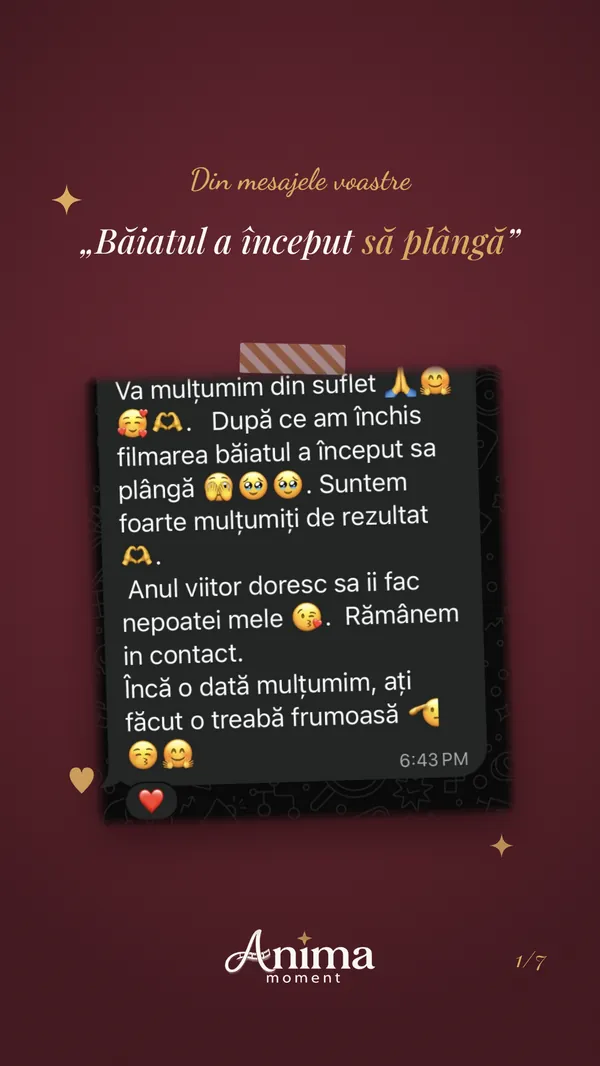
„Our boy started crying” 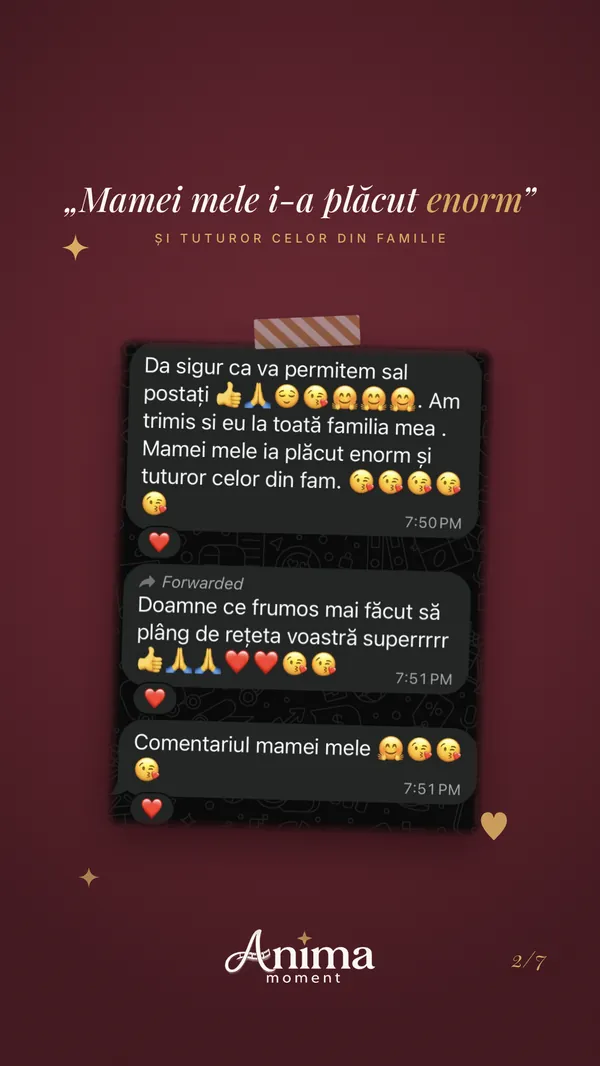
„My mother loved it” 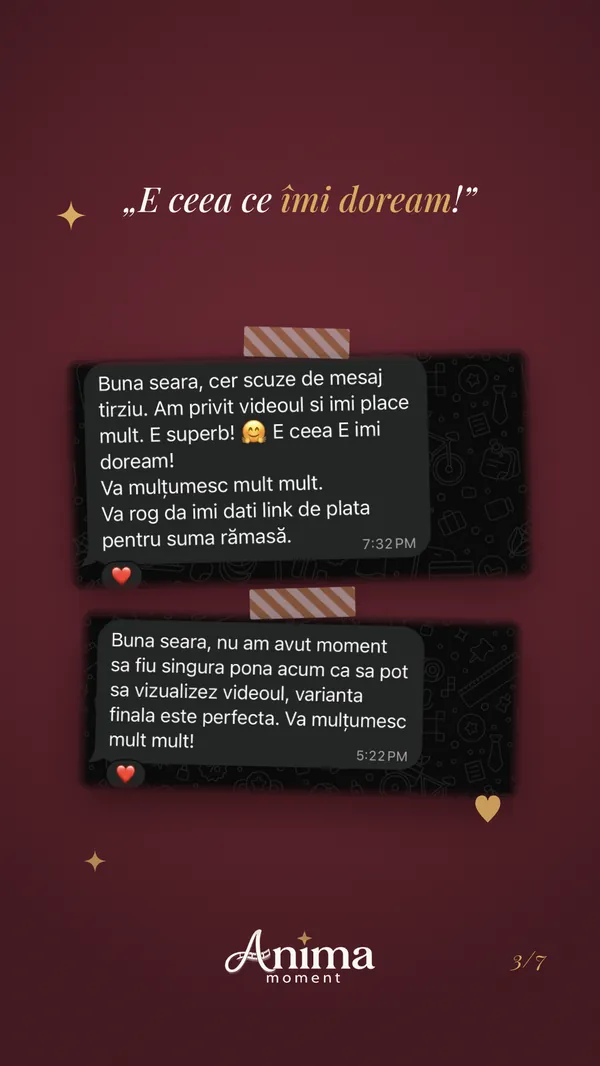
„It's exactly what I wanted!” 
„We all cried here” 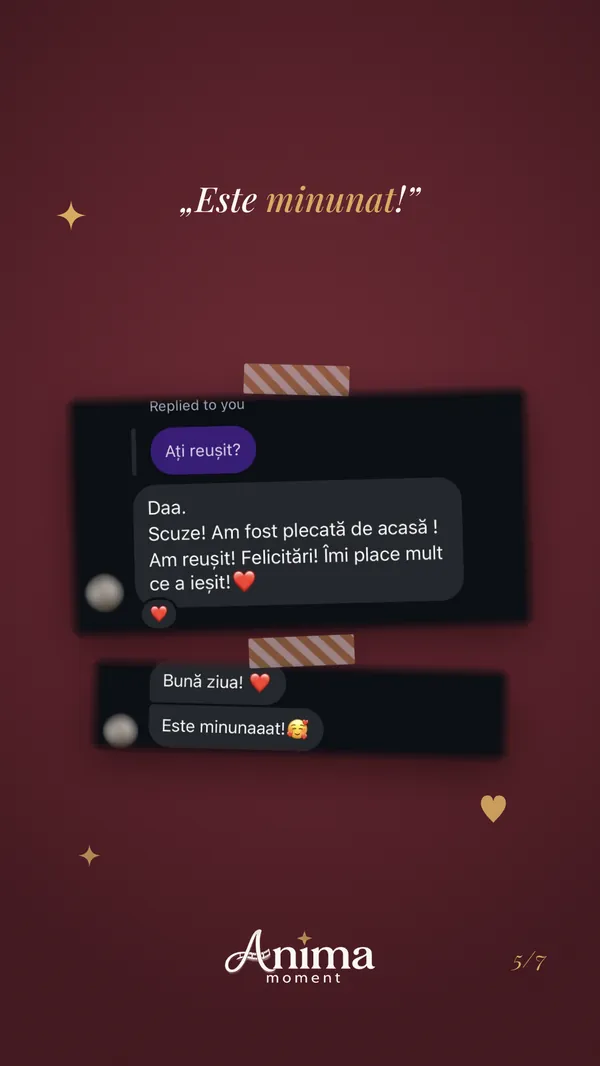
„It's wonderful!” 
„I watched it 3 times!” 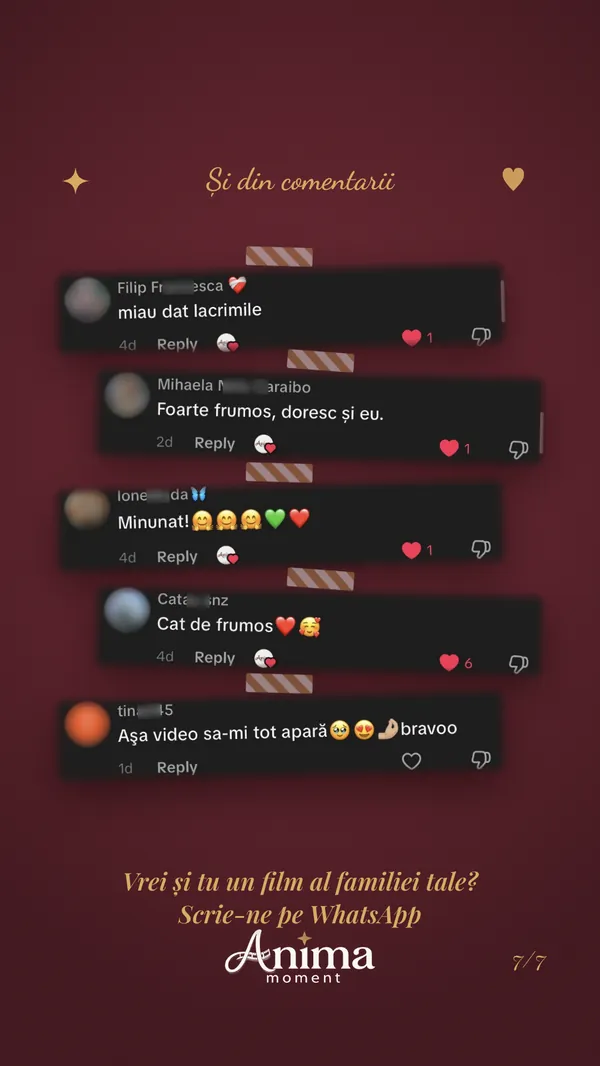
„It brought tears to my eyes”
A team member will reply, usually within ~5 minutes.